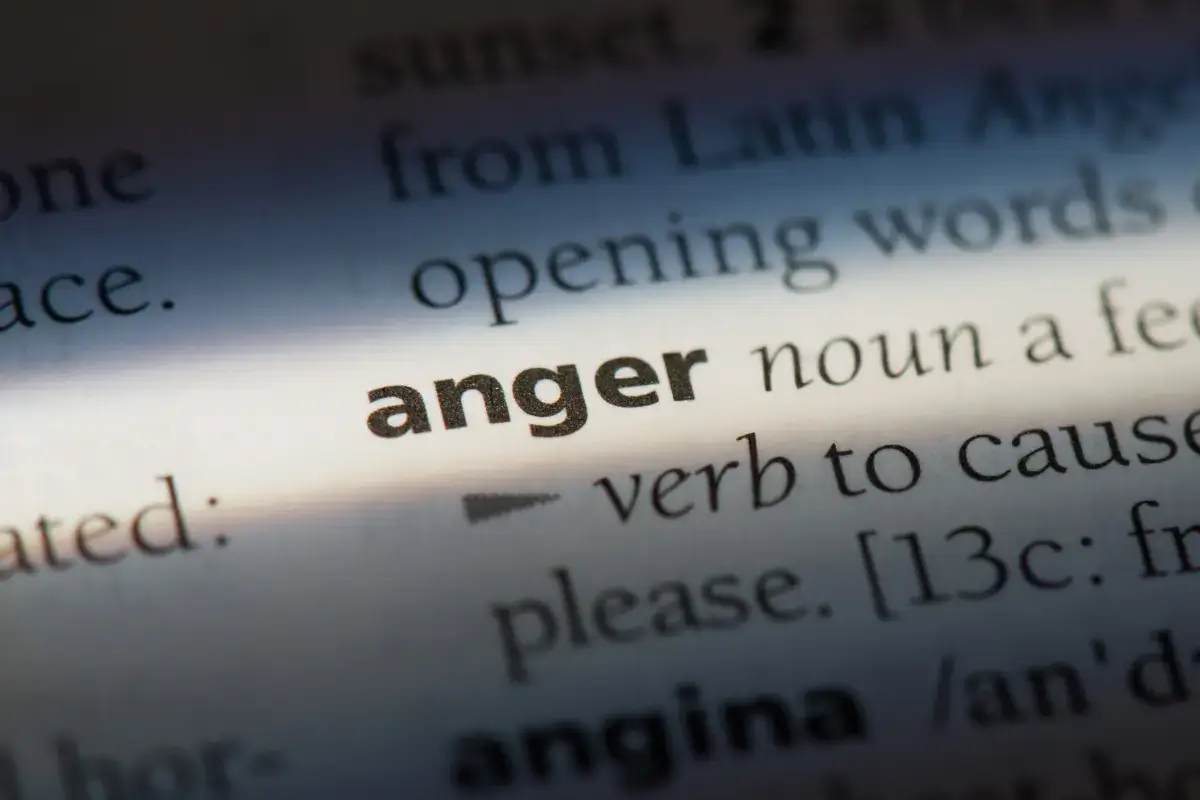
Anger is one of the most misunderstood emotions, and righteous anger perhaps most of all. As children, many of us learn that anger is dangerous: it will consume us, hurt others or corrupt us.
Yet there comes a point in personal growth when a different kind of development is needed. Within a safe therapeutic space, the unconscious mind can begin to open. Trauma, held safely, may begin to release, rising on the wings of butterflies as transformation unfolds. No longer is it only the visible work of stopping behaviours, but the quieter reckoning with what happened.
This article explores the difference between resentment and righteous anger. It also looks at why forgiveness is not always the first step. And it shows how anger, once understood, can become a source of strength.
Across therapeutic, developmental and recovery communities, many people see resentment as anger that has stayed unprocessed, internalised or uncontained. Over time, it can become tangled up with intrusive thoughts, grievance, rumination and non-forgiveness.
Life can wound us in many places: at work, at home, in relationships and in families. It can also wound us through disappointment, betrayal, chronic pressure, anxiety or grief.
In response, we may develop ways of coping that bring short-term relief but carry a longer-term cost. We may avoid difficult thoughts, withdraw from feeling or overthink. We may criticise ourselves, struggle to hold boundaries, or turn away from what most needs attention. When these patterns become cyclical, they can leave us feeling further from ourselves rather than closer to resolution. [6][7]
Yet this has a cost. Chronic rumination is physiologically and psychologically draining. Research links repetitive negative thinking with prolonged stress activation and disrupted sleep. Over time, this may increase vulnerability to emotional dysregulation, relapse or further distress. [6][7]
When anger becomes fused with identity, it can quietly turn into a grievance that keeps us stuck. Many of us have seen this in others and, if we are honest, in ourselves too.
Healing in these moments often asks for more than managing symptoms. It invites us to move gently toward the core of the pain and the meanings we have made around it. Part of that deeper work may mean not forgiving too quickly. This matters most where others played down the harm, or where we carried it in silence. Sometimes righteous anger is what first interrupts the cycle, restores dignity and allows something in us to come back online. [10][12]
In some cases, this wider pattern may include substance use or other compulsive and self-defeating behaviours. Within addiction treatment, 12-step frameworks (sometimes called the Minnesota Model) offer one well-known example of working with these dynamics. In that setting, people do not treat anger, resentment and self-deception as abstract ideas. They work with them as lived emotional realities that shape thought, behaviour and relationships. [1][2]
Research suggests that structured 12-step facilitation can help many people with alcohol and other use disorders. It seems particularly helpful in supporting considered choices around abstinence and long-term recovery. [1][2]
Trauma, chronic stress and substance use can overlap. Where there has been hurt, abuse, neglect, shame or unresolved pain, people may turn to self-soothing. This can bring momentary relief, yet deepen disconnection, dysregulation and distress over time. [3][4]
Addiction is a useful example here, but not because it is the only lens on anger. It reflects a wider human pattern: heartache and emotional pain seeking relief in ways that soothe briefly, yet deepen suffering.
Over time, we may come to value moving forward gradually and consistently, rather than urgently or all at once. It is a little like Aesop’s fable, in which the slow, steady tortoise beats the fast but inconsistent hare. Taking life a day at a time can help hold difficult emotion within a more manageable human space. Structured support environments are more than places to meet or share. Whether they are therapeutic groups, peer communities or recovery programmes, they can work as psychologically sophisticated ecosystems.
Repetition over time can help reshape personal narrative. Shared testimony can also reduce shame. Consistent relational support can provide co-regulation long before that language is used clinically. Social belonging may activate reward and safety systems that compete with destructive or self-defeating patterns. Reflection can challenge distortion. Practices of accountability and repair can restore agency and integrity. [5]
Therapy and therapeutic coaching now describe, in clinical terms, many processes that recovery and personal-growth communities have practised for decades. They also offer a structured, relational space where these changes can unfold safely. [5]

For some readers, the word “righteous” may carry a religious or spiritual meaning. Here, you can read it in whatever way feels most meaningful to you. It might be a moral, psychological or personal sense of what is right in the face of harm.
It is the moment the self refuses to collapse and chooses dignity over silence. Righteous anger is not petty. Nor is it vindictive, and it is not rage. Rather, it is protective and, at its core, orientated toward restoration. In trauma terms, it often marks the return of mobilisation after freeze. The body comes back to life after shutting down to survive. [10]
For many survivors, especially those who learned to appease or collapse, anger is the first sign of dignity coming back online. It is a kind of reactivation of the human system. Anger says: that should not have happened. It says: that was and is unacceptable. And it says: I matter.
We often link letting go with forgiveness, and see both as part of inner freedom. There is deep truth in that. Yet they are not the same process. Letting go may be an internal, psychological release. Forgiveness, by contrast, is a moral, relational or spiritual act, and the two do not always happen together. [8][9]
Some people believe that healing requires absolute forgiveness of those who caused harm, especially in childhood. Forgiveness can then feel like a condition for moving forward. Without it, one may fear being spiritually blocked or psychologically incomplete. What becomes clearer with experience is more nuanced. Release, rather, is a physiological and psychological process. The nervous system does not require absolution in order to integrate trauma. Instead, it requires safety, processing and meaning-making. Forgiveness, when it comes, is not surrender to the past but a liberation of the self. [12]
Emerging evidence also highlights the importance of self-forgiveness as distinct from forgiving others. Self-forgiveness does not mean excusing harm or denying responsibility where it exists. Rather, it means acknowledging what happened and working through feelings such as shame or guilt. It also means relating to ourselves with growing compassion and accountability. Importantly, self-forgiveness can occur independently of forgiving those who have caused harm. In trauma-informed work, especially after abuse or coercion, restoring the self may matter more than forgiving others. [8][9]
There are seasons in personal growth when refusing forgiveness is not simply bitterness, but an expression of emerging autonomy and psychological sovereignty. To forgive prematurely can mean minimising harm, overlooking it or hiding it. It can mean betraying the part of oneself that has finally found a voice. Trauma-informed practice suggests that forced or premature forgiveness can reinforce powerlessness and deepen shame. It can even recreate the very dynamics we are trying to heal. Particularly in cases of abuse or coercion, the right not to forgive can be an important step in self-restoration and agency. [11][12]
Healing unfolds in stages. First comes safety and stabilisation. Then permission to feel anger without collapsing into it. Then boundaries, and finally meaning. Sometimes, much later, forgiveness arises quietly and without force. Sometimes it does not. Either way, healing can still be real and meaningful. [12]
Personal growth also demands responsibility. We can acknowledge injustice without outsourcing our future to it. Taking ownership of our choices today does not require absolving those who caused catastrophic, life-altering harm. Responsibility is not reconciliation. Rather, it is authorship.
The guiding question becomes not “Have we forgiven?” but “Is our anger integrated?” Does it protect our boundaries or define our identity? Has it been metabolised into clarity, or does it recycle as rumination? Integrated anger strengthens, whereas ruminative resentment depletes. [6]
We might therefore see righteous anger as serving several essential psychological functions. It restores boundaries, affirms self-worth, interrupts passivity, resists injustice and fuels determination. When channelled constructively, it becomes the ignition point of personal agency. It clarifies what must change and moves us to take first steps, then keep going. It also asks for self-management, so that emotion becomes directed energy rather than chaos. Over time, it can sharpen awareness and reinforce the belief that we can act, adjust and shape our own future.
Righteous anger is not the enemy. Instead, it can be a doorway we find the courage to open and walk through. It directs us to where the wound is and teaches us where the boundary needs to stand. Above all, it reminds us that dignity sometimes arrives wearing the face of fire. Healing is not about erasing what happened. Rather, it is about reclaiming ourselves. Forgiveness, if and when it comes, is a gift toward release, and release is essential. It begins not with denial, but with the courage to face the truth and allow anger to become wisdom rather than poison.
If anger ever feels overwhelming or unsafe, or you are worried about your own safety or someone else’s, please call 999 in an emergency. If you are struggling and need someone to talk to, Samaritans are available day and night on 116 123.

Therapy offers a safe, confidential space to explore where anger comes from, what it may be protecting and how to work with it. Together, we can look at patterns of rumination, boundaries and self-forgiveness, at a pace that feels right for you.
 English (UK)
 Français